
Research highlights
-
AI and self-regulated learning
Connect evidence on AI-supported self-regulated learning, learner readiness and programming environments to design phase-sensitive studies.
-
AI agents in programming education
Read evidence on AI agents, ChatGPT learner readiness and immersive programming to design studies of collaboration and programming learning.
-
AI literacy and GenAI adoption
Connect AI literacy, ChatGPT adoption intentions, task effectiveness and education policy through complementary empirical and synthesis studies.
Programming education and learning environments
Journal of Educational Computing Research 2025
MetaClassroom: A New Paradigm and Experience for Programming Education

Learning environment

Virtual classroom

Game-based practice
MetaClassroom connects immersive programming activities with three-dimensional learning progression. A quasi-experimental comparison with traditional classrooms reported improvements in programming achievement, self-regulated learning, learning beliefs and motivation. The study examines how a designed learning environment can connect teaching, learning and assessment.
Study design. Quasi-experimental comparison of an immersive programming environment and traditional classrooms.
Humanities and Social Sciences Communications 2024
What factors will affect the effectiveness of using ChatGPT to solve programming problems? A quasi-experimental study
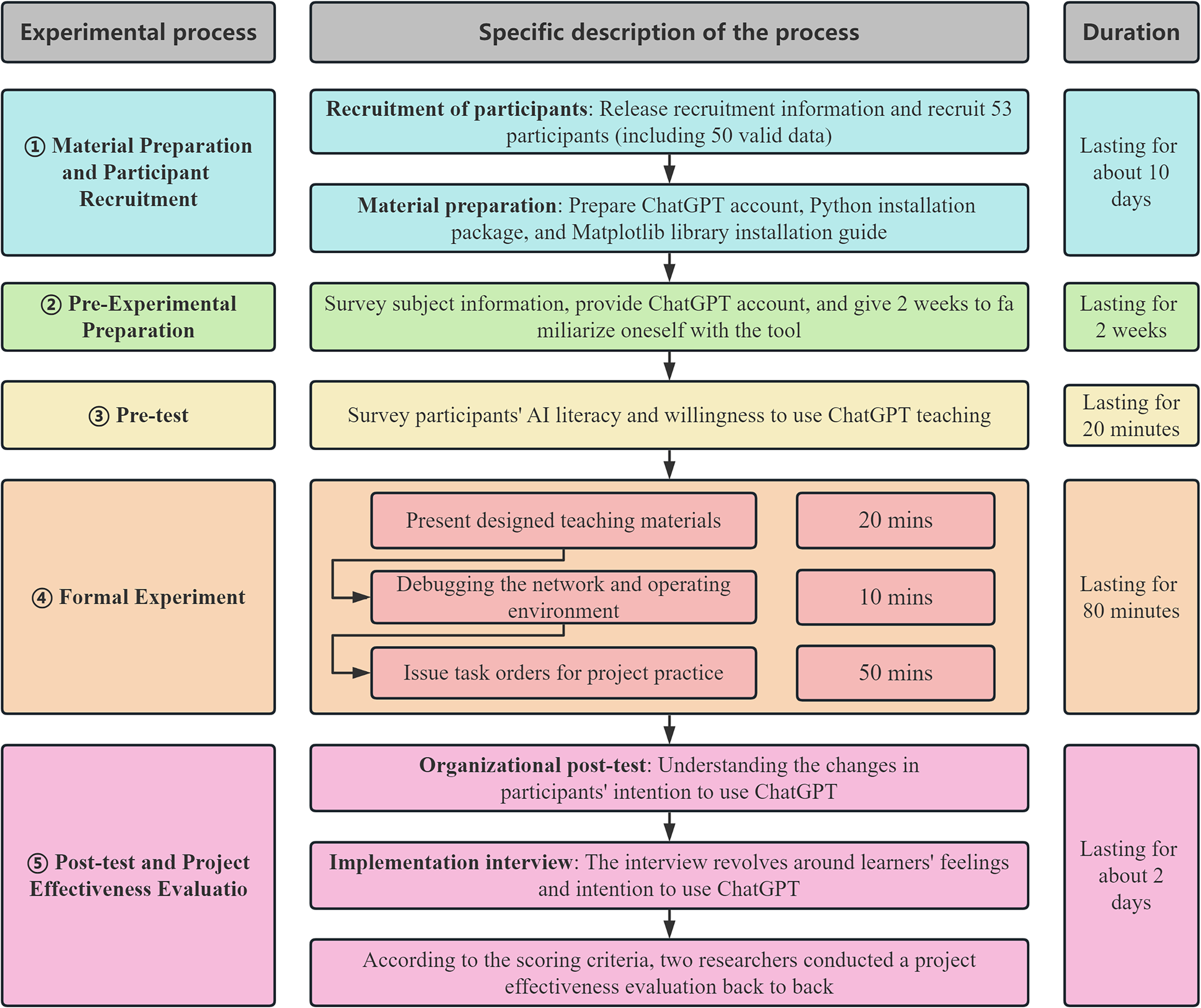
Experimental design
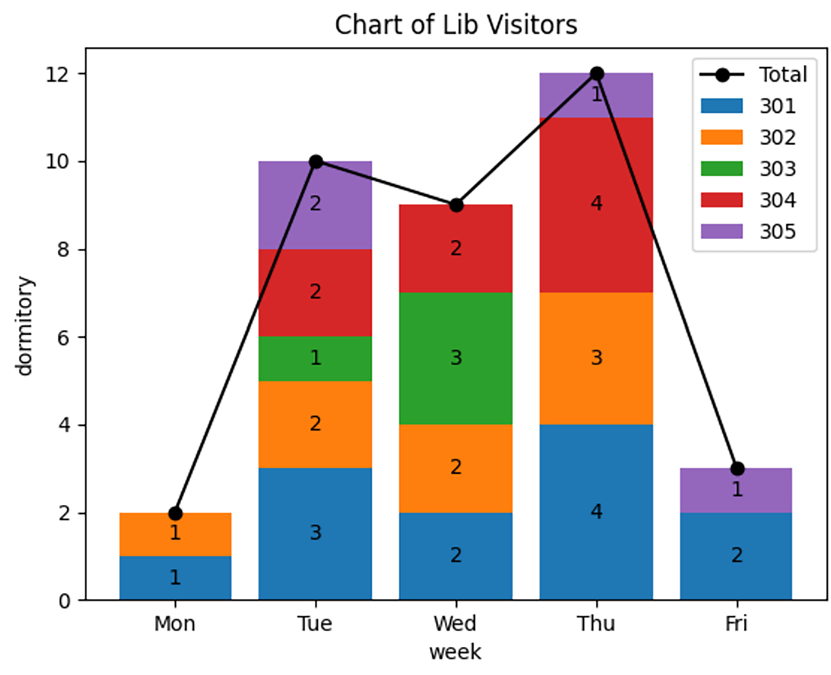
Task example
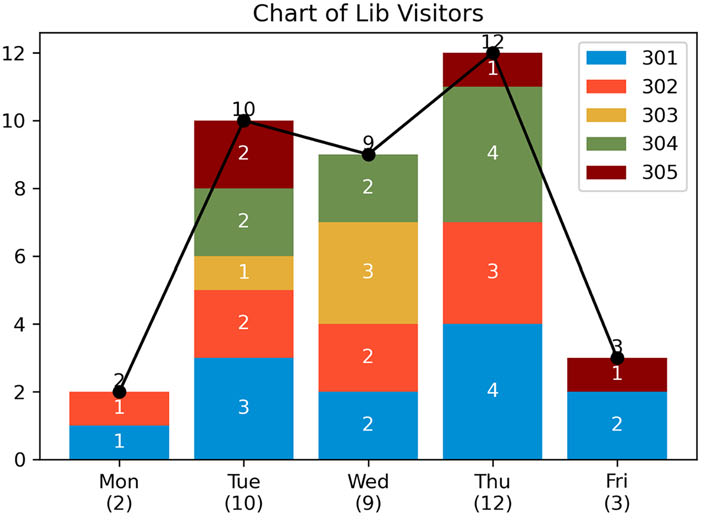
Student output
Using Python graphing tasks, this quasi-experimental study examines why learners differ in their effectiveness when using ChatGPT to solve programming problems. AI literacy, programming knowledge and understanding of ChatGPT are associated with effective use. The study connects the design of AI-supported programming activities with learners' existing capabilities.
Study design. Quasi-experimental study in a Python graphing and programming problem-solving context.
Education and Information Technologies 2025
Impact of AI-agent-supported collaborative learning on the learning outcomes of University programming courses
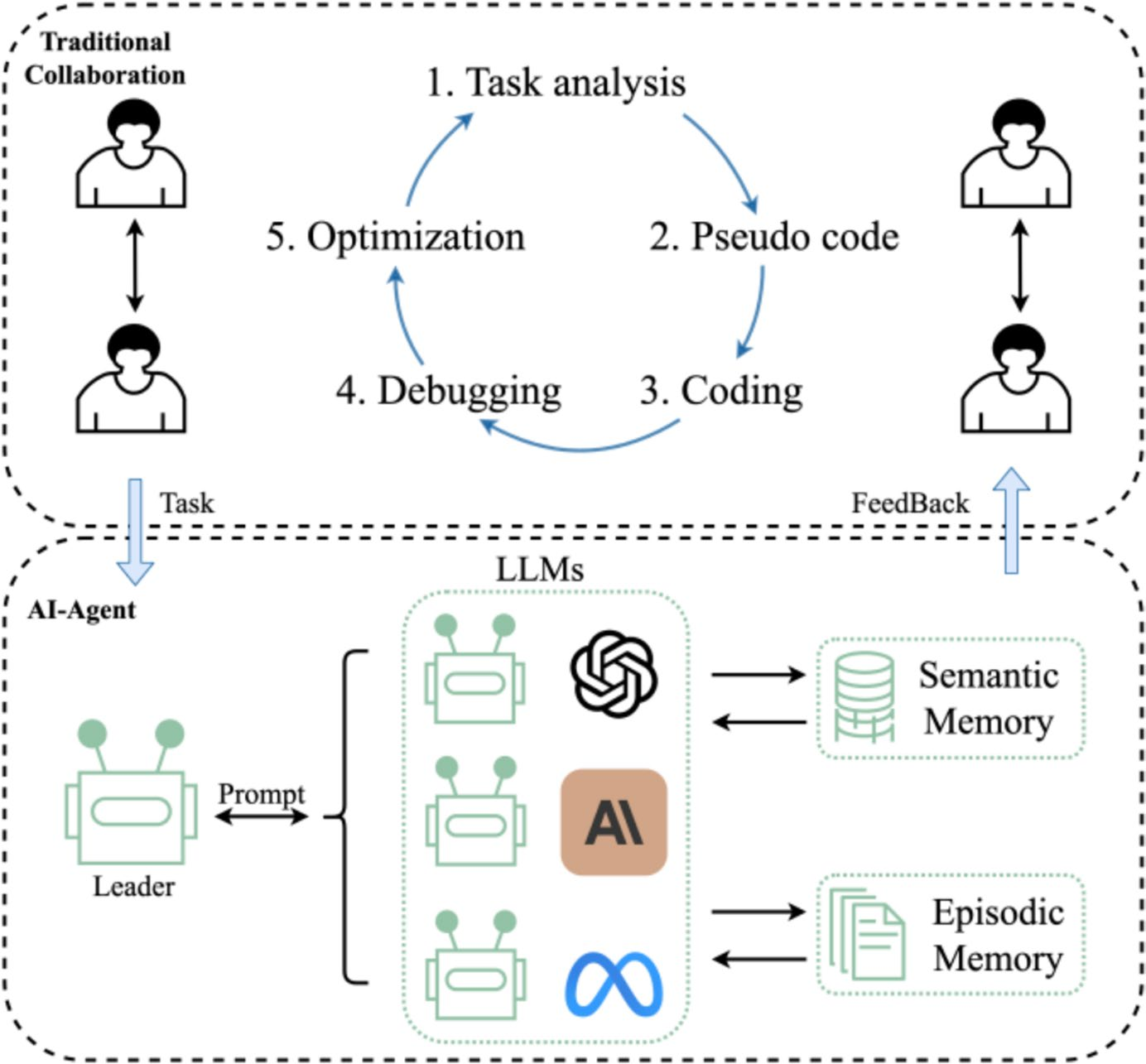
This six-week study compares AI-agent-supported collaborative learning with computer-supported collaborative learning in a university programming context. The 45 participants were allocated to groups of 24 and 21. The AI-supported group achieved stronger learning outcomes, self-efficacy and interest, with lower mental effort; the difference in mental load was not significant.
Study design. Six-week quasi-experimental comparison, with 45 undergraduates in an ACM programming competition teaching environment.
International Journal of Human–Computer Interaction 2026
Human-AI Collaborative Learning Ecosystem: Effects of Multi-Agent-Based Programming Learning on Learning Outcomes, Computational Thinking, and Behavioral Patterns in Higher Education
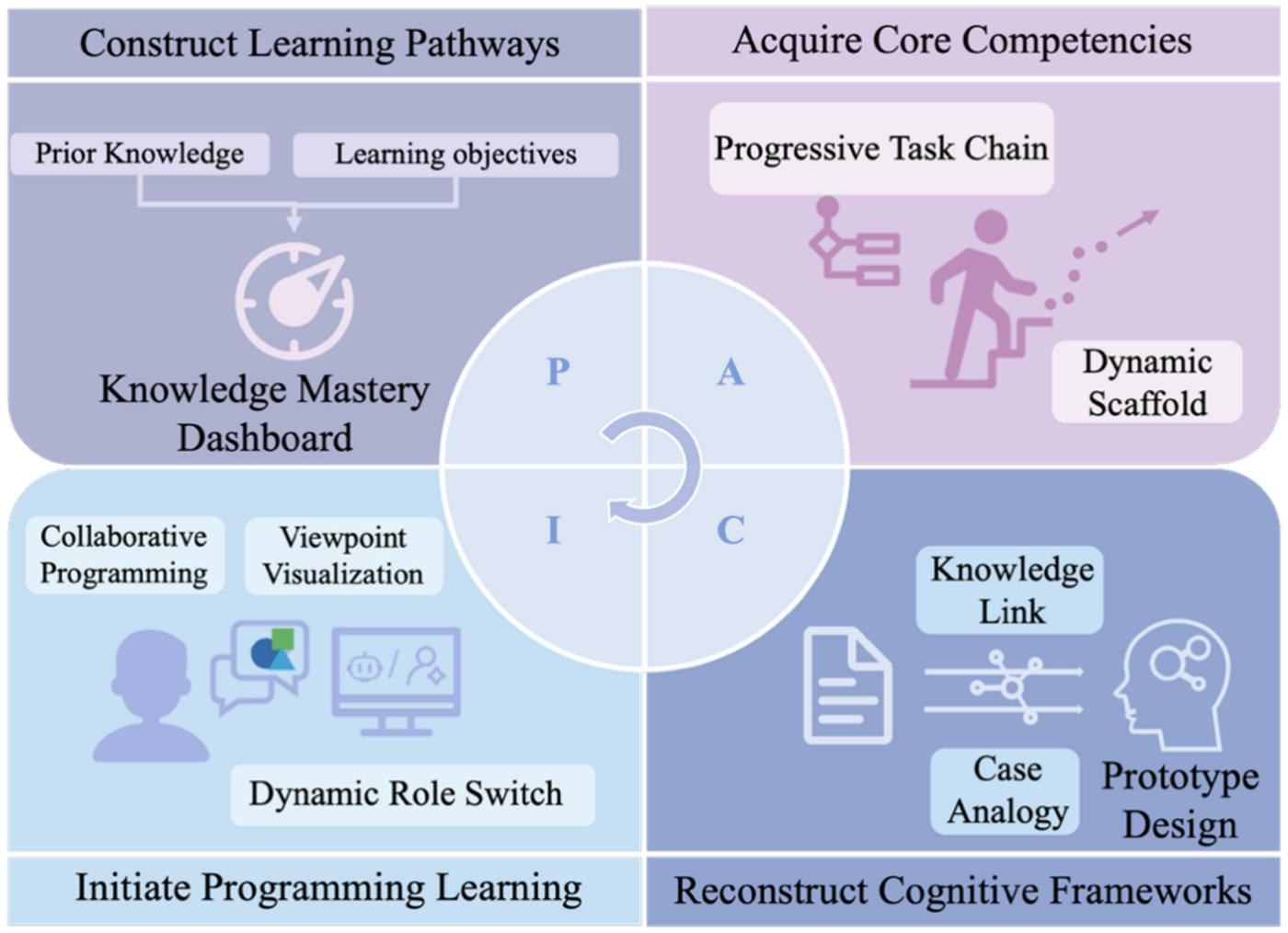
A 12-week experiment with 54 undergraduates compares Multi-Agent-based Programming Learning (MA-PL) with conventional programming instruction. Students receiving multi-agent support achieved stronger learning outcomes and computational thinking, with higher-level cognitive engagement in their programming behavior. Behavioral analysis also identified less autonomous construction and a shift from peer collaboration toward human-AI collaboration.
Study design. 12-week randomized experiment with 54 undergraduates (27 per group), combining learning-outcome and computational-thinking assessments with behavioral sequence analysis.
Generative AI policy and adoption
Educational technology research and development 2025
The journey of challenges and victories: exploring the transformation action framework in the GenAI era from multifaceted policies
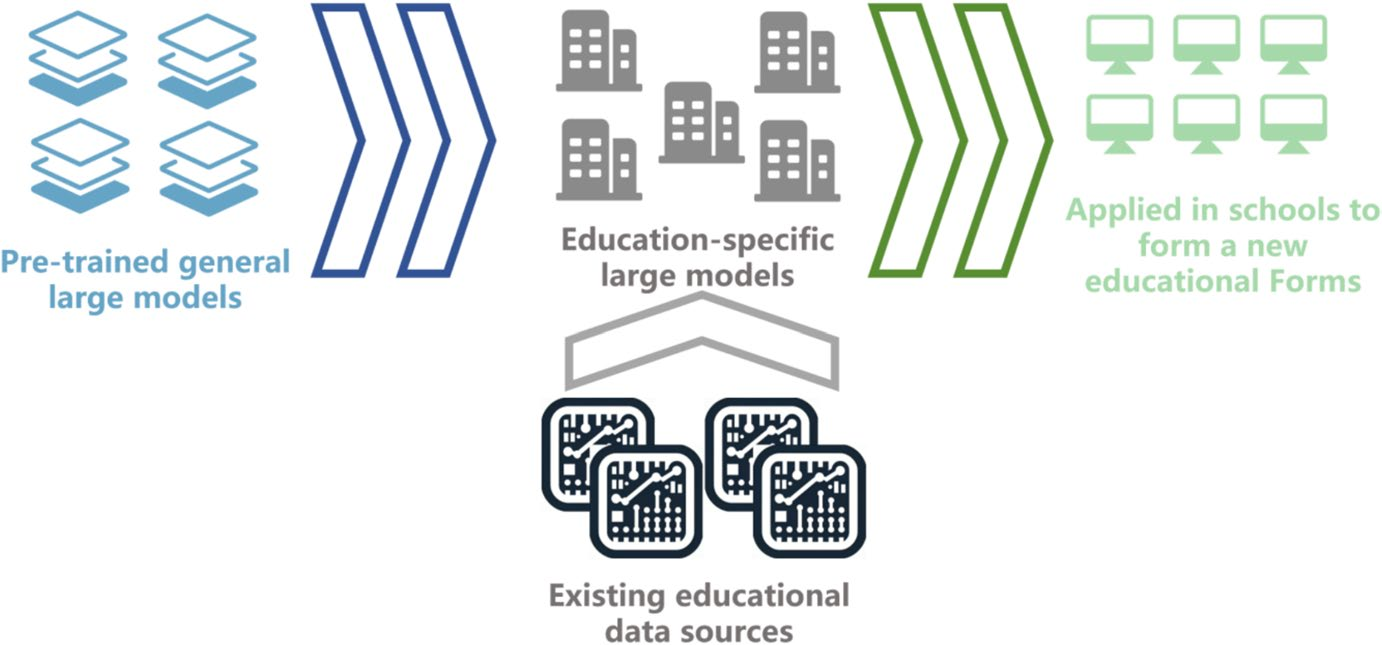
A Educational transformation
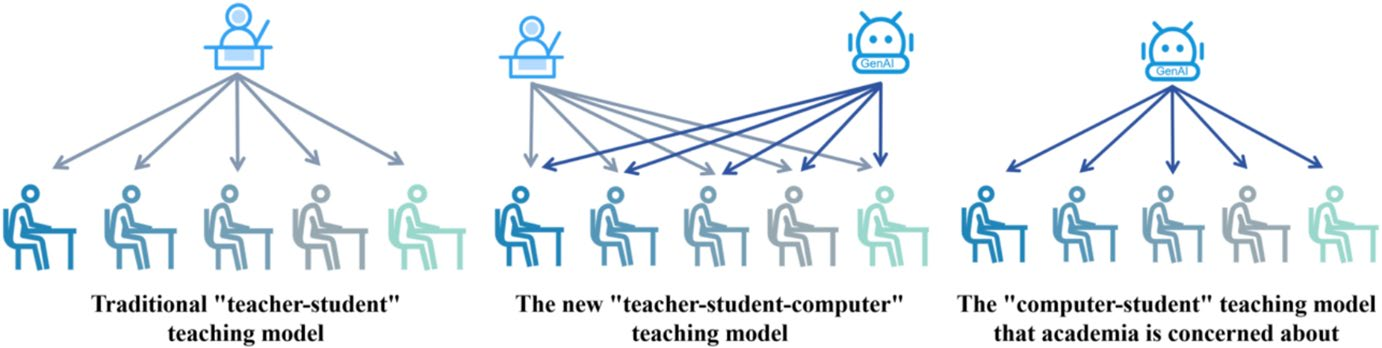
B Classroom relationships
This study synthesizes 11 policy and guideline documents through meta-ethnography. Its framework connects macro-level social and workforce change, meso-level educational organization and pedagogical logic, and micro-level teaching and learning scenarios. It offers a way to examine how generative AI policy relates to changes in educational practice.
Study design. Meta-ethnographic synthesis of 11 policy and guideline documents from international organizations, education ministries and universities.
Journal of Computer Assisted Learning 2025
Deconstructing University Learners' Adoption Intention Towards AIGC Technology: A Mixed-Methods Study Using ChatGPT as an Example
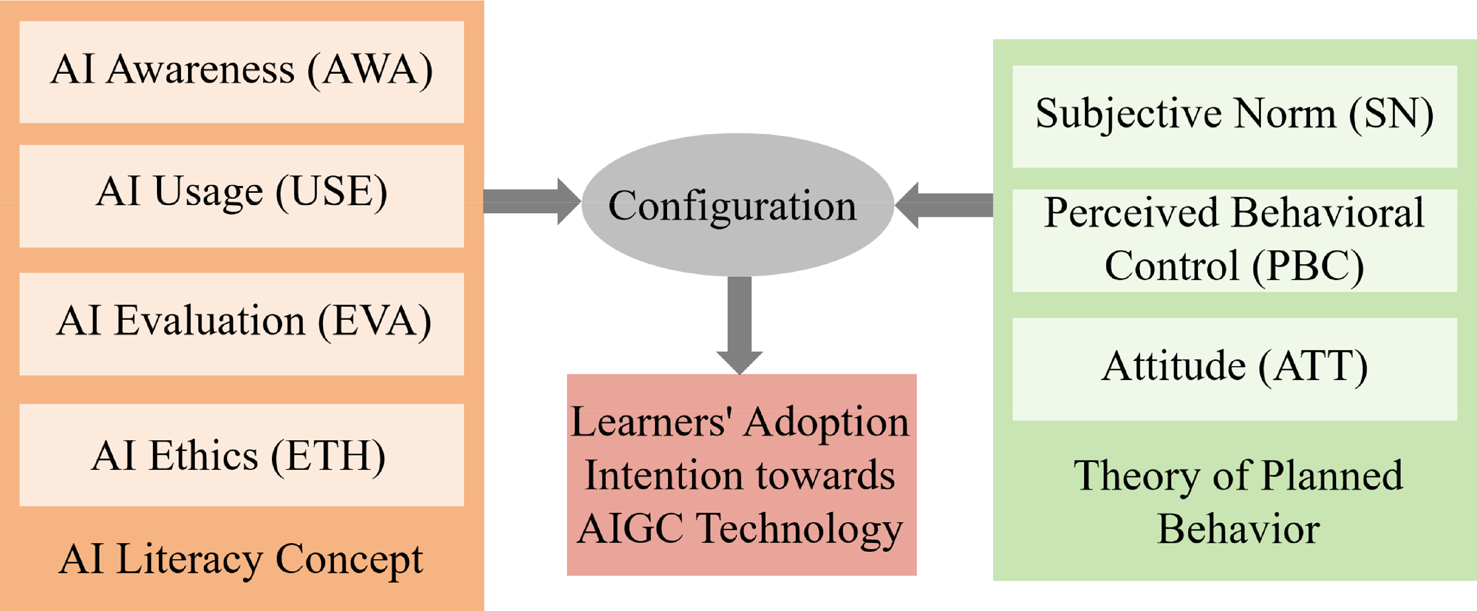
This mixed-methods study examines university learners' intentions to adopt AIGC technology using ChatGPT as its example. Exploratory activities and interviews inform a decision framework, followed by fuzzy-set qualitative comparative analysis of 233 valid questionnaires. Six configurations are associated with high adoption intention, with AI literacy and perceived behavioural control playing prominent roles.
Study design. Sequential exploratory and configurational analysis using interviews and fsQCA of 233 valid questionnaires.
Education and Information Technologies 2024
Empowering education development through AIGC: A systematic literature review
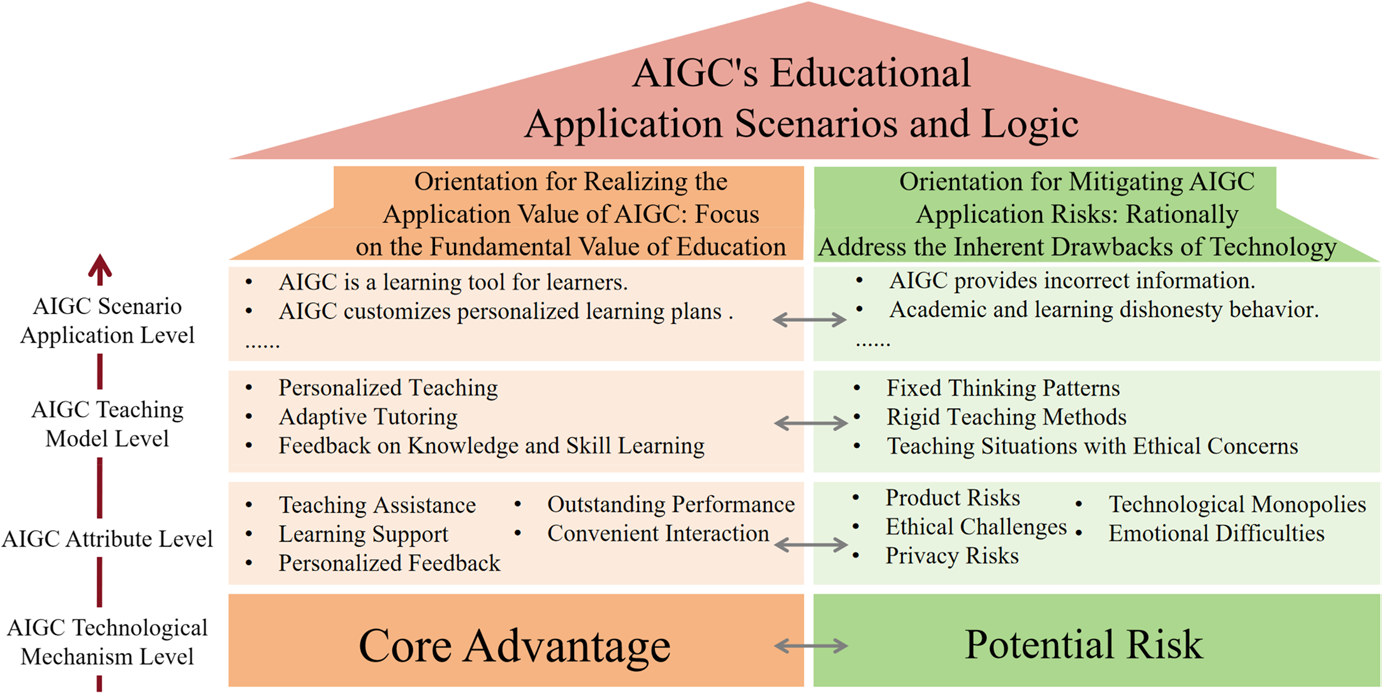
This systematic review examines 134 publications retrieved from EBSCO, EI Compendex, Scopus and Web of Science. It maps educational uses of AIGC across performance assessment, instructional applications, learning outcomes, advantages and disadvantages, and future prospects. Grounded-theory analysis informs an account of application scenarios and a research agenda.
Study design. Systematic literature review of 134 publications from four databases, supplemented by grounded-theory analysis.
The International Journal of Management Education 2026
To use or not to use? Generative AI adoption in Chinese business schools
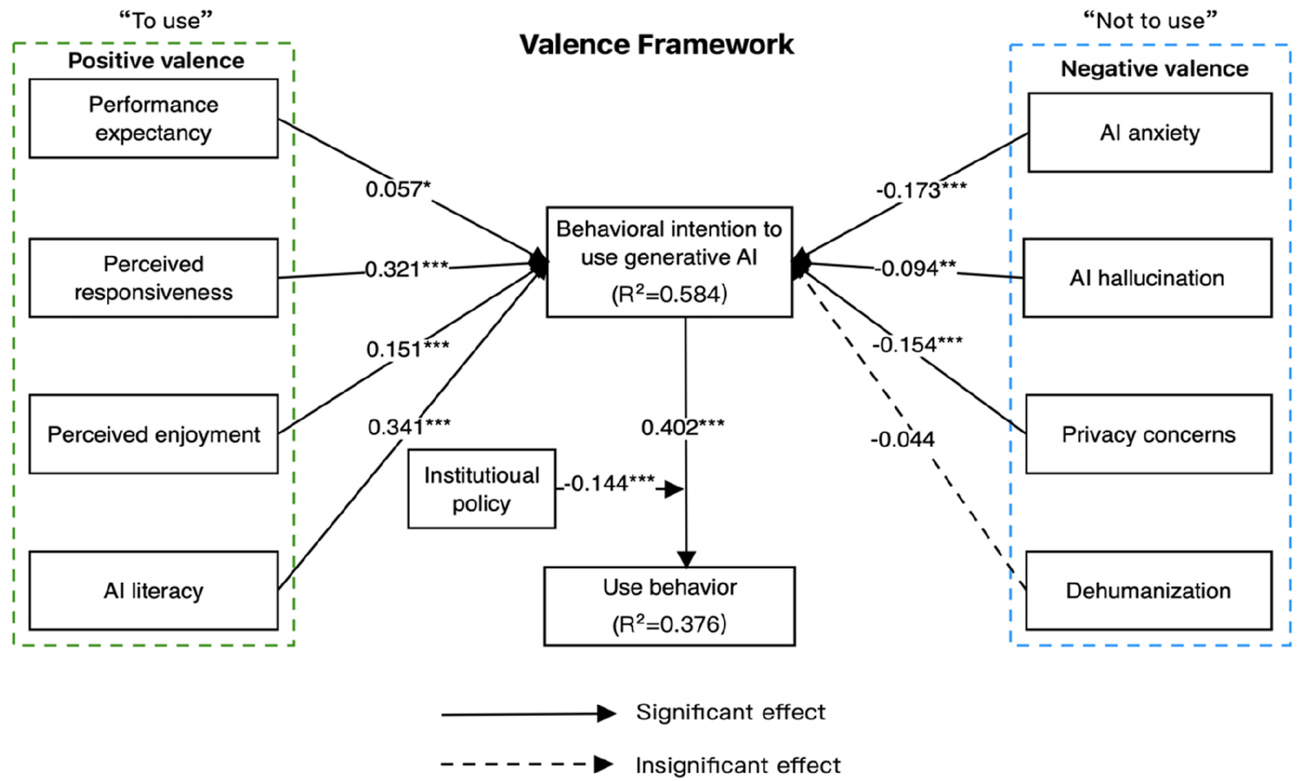
A survey of 797 students and faculty applies the valence framework to GenAI adoption in Chinese business schools. PLS-SEM links expected benefits, enjoyment and AI literacy with stronger adoption intentions, and anxiety, hallucination and privacy concerns with weaker intentions. Institutional policy moderates the intention-use relationship, with different adoption patterns for students and faculty.
Study design. Survey of 797 students and faculty, analyzed using PLS-SEM, institutional-policy moderation and student-faculty multigroup comparisons.
The International Journal of Management Education 2026
From information evaluation to technology use: Generative AI adoption in Chinese business schools
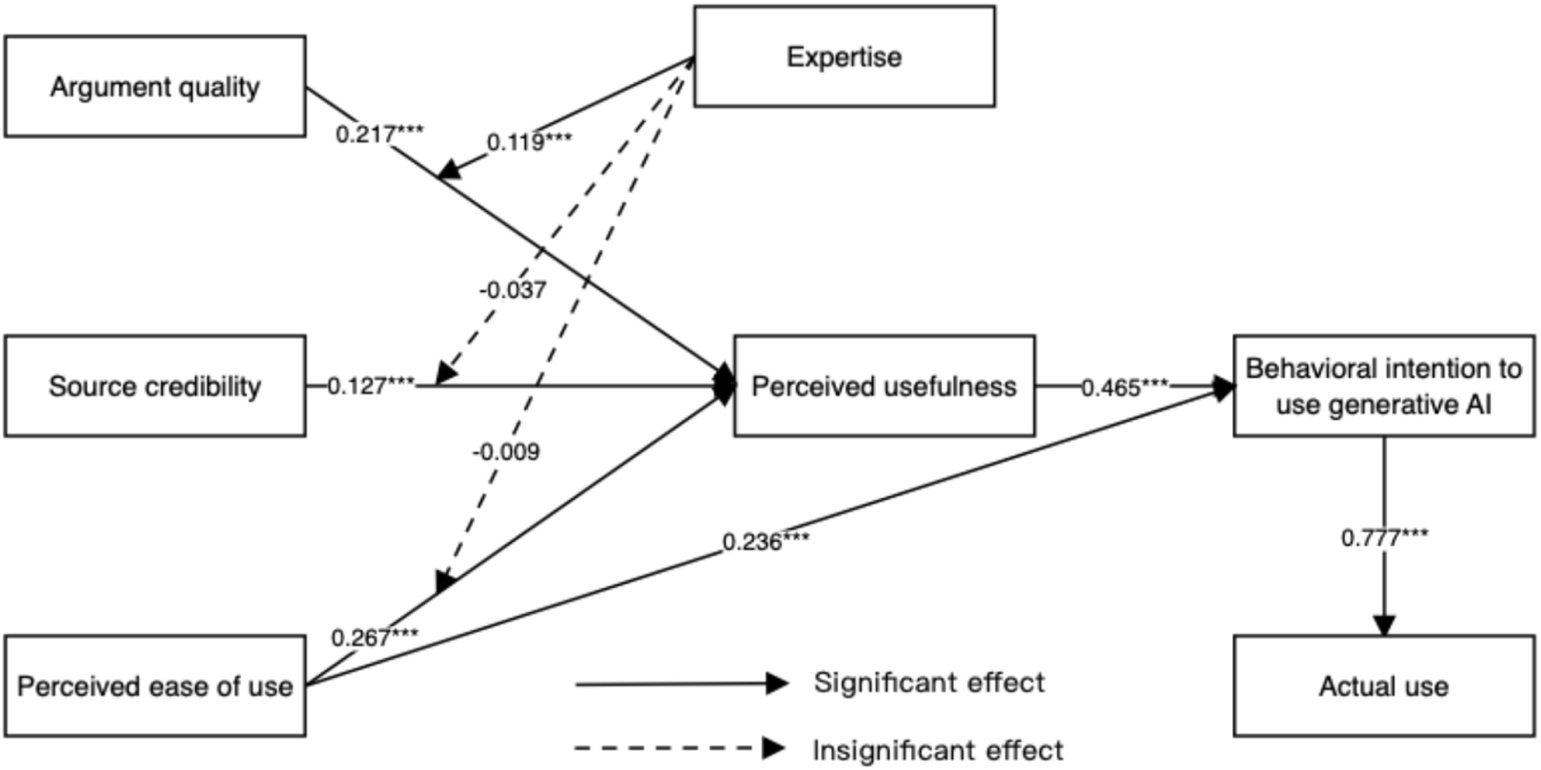
Integrating the Information Adoption Model and Technology Acceptance Model, this survey of 672 business school students examines GenAI adoption. Ease of use, argument quality and source credibility are associated with perceived usefulness, which relates to adoption intention and reported use. Expertise and demographic and experience differences shape these relationships.
Study design. Survey of 672 business school students, analyzed using PLS-SEM, expertise moderation and demographic and experience-based multigroup comparisons.
Self-regulated learning and learning analytics
British Journal of Educational Technology 2026
AI support in self-regulated learning: A decade of technological evolution and meta-analysis
A Evolution of the evidence base
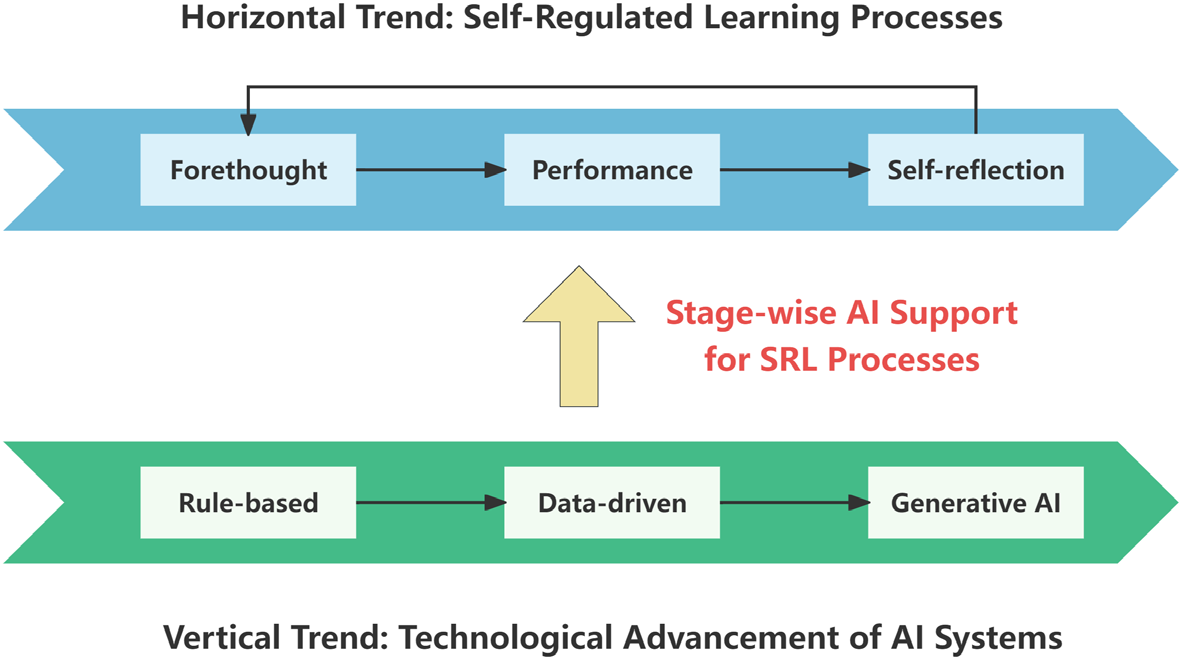
B AI support across learning phases
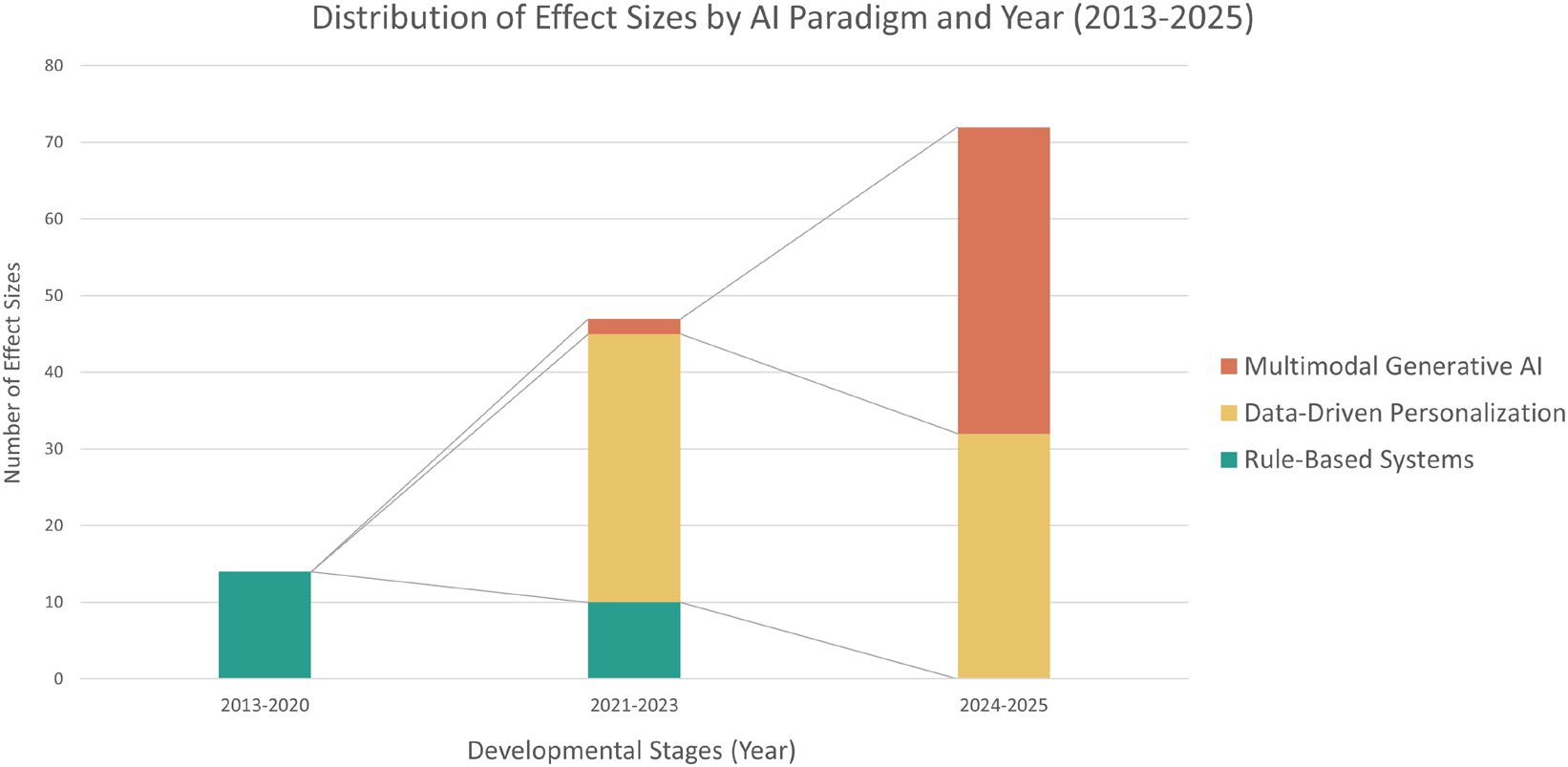
A meta-analysis of 35 empirical studies from 2013 to 2025 examines AI support within Zimmerman's cyclical model of self-regulated learning. It reports a moderate overall effect (g = 0.507), with different effects across learning phases and measurement approaches. The synthesis distinguishes immediate task performance from durable, transferable self-regulatory competence.
Study design. Meta-analysis of 35 empirical studies, with SRL-phase, technology and contextual moderator analyses.
Data in Brief 2024
Annotated emotional image datasets of Chinese university students in real classrooms for deep learning
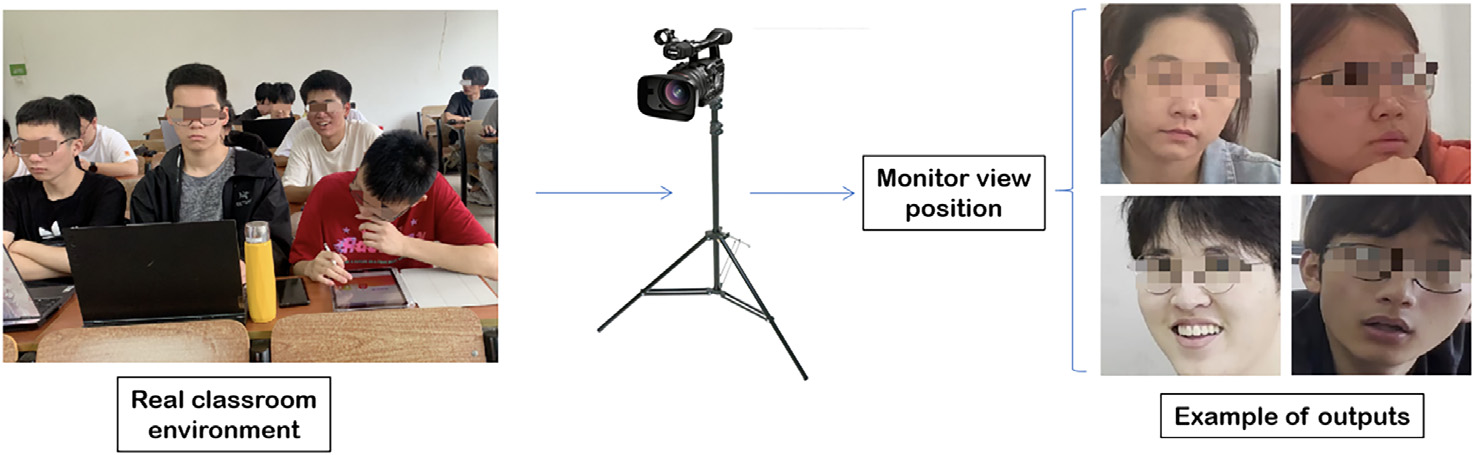
A Classroom data collection
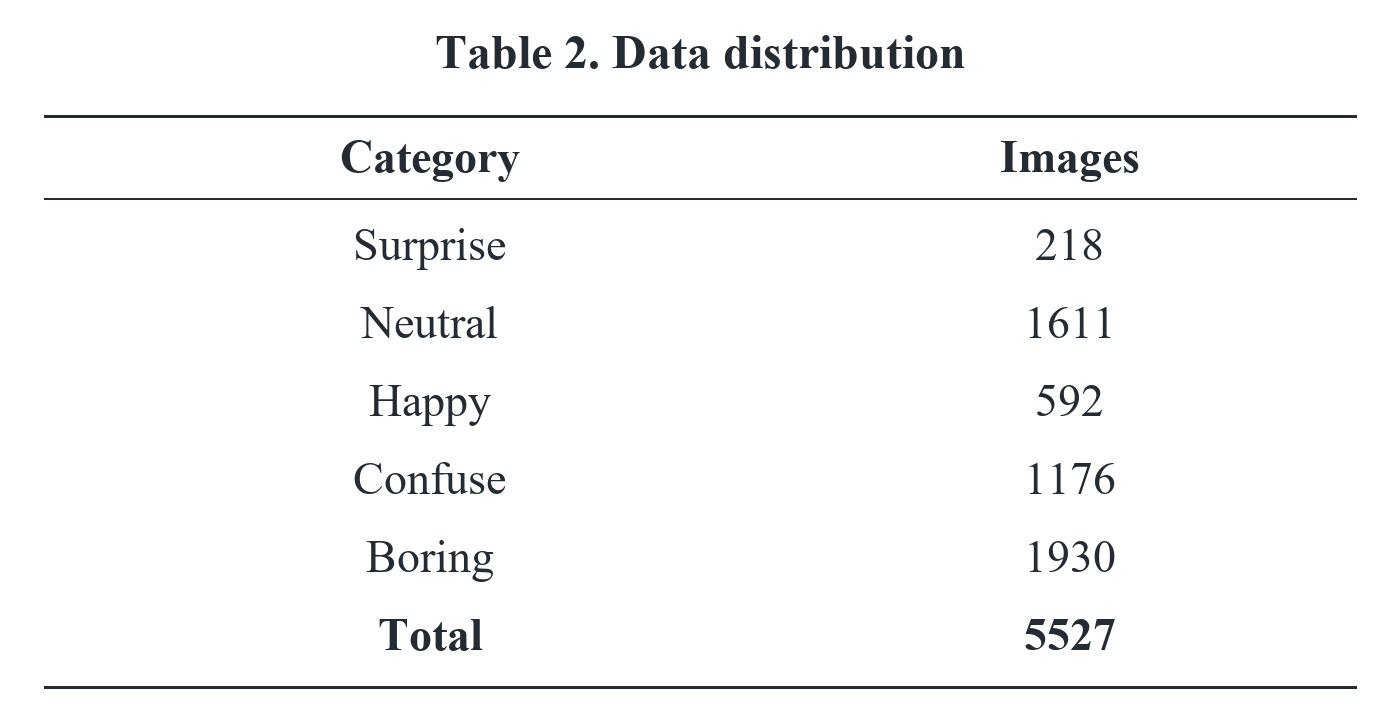
B Data distribution
This data article describes annotated emotional images of Chinese university students in real classroom settings for deep-learning research. It provides a reference point for studying classroom affect and evaluating image-based educational analytics using the dataset's documented collection and annotation procedures.
Study design. Data article describing annotated classroom emotional images for deep learning.
Educational agents and simulation
Interactive Learning Environments 2026
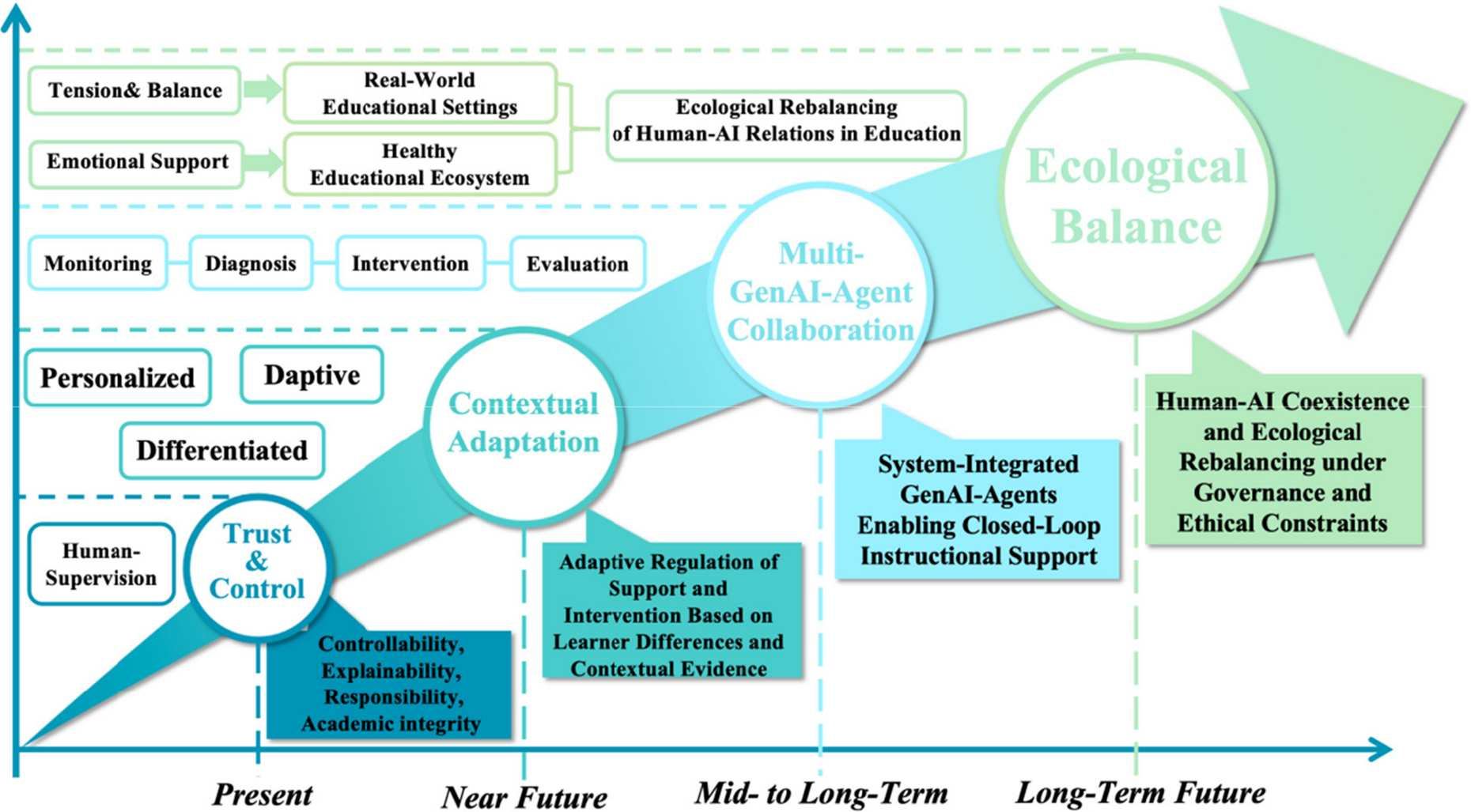
GenAI-agents in education: a systematic review of macro-level trends, educational roles, theoretical foundations and future agendas
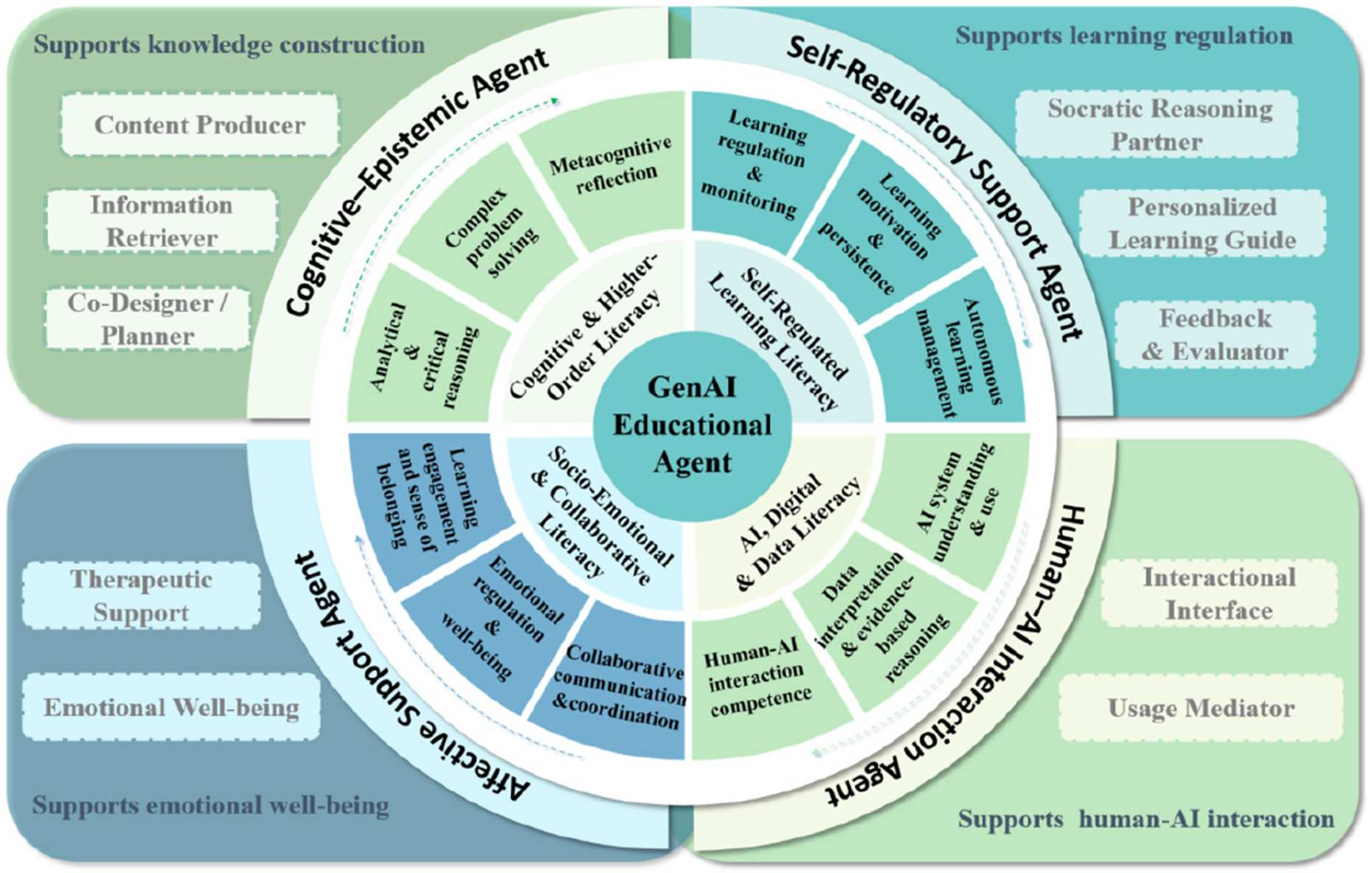
A Educational roles
B Future directions
This systematic review organizes research on generative-AI agents in education around macro-level trends, educational roles, theoretical foundations and future agendas. It provides a literature-synthesis entry point for examining how educational agents are conceptualized and studied across learning settings.
Study design. Systematic review of GenAI agents in education.
Findings of the Association for Computational Linguistics: EMNLP 2025 2025
Evolution in Simulation: AI-Agent School with Dual Memory for High-Fidelity Educational Dynamics
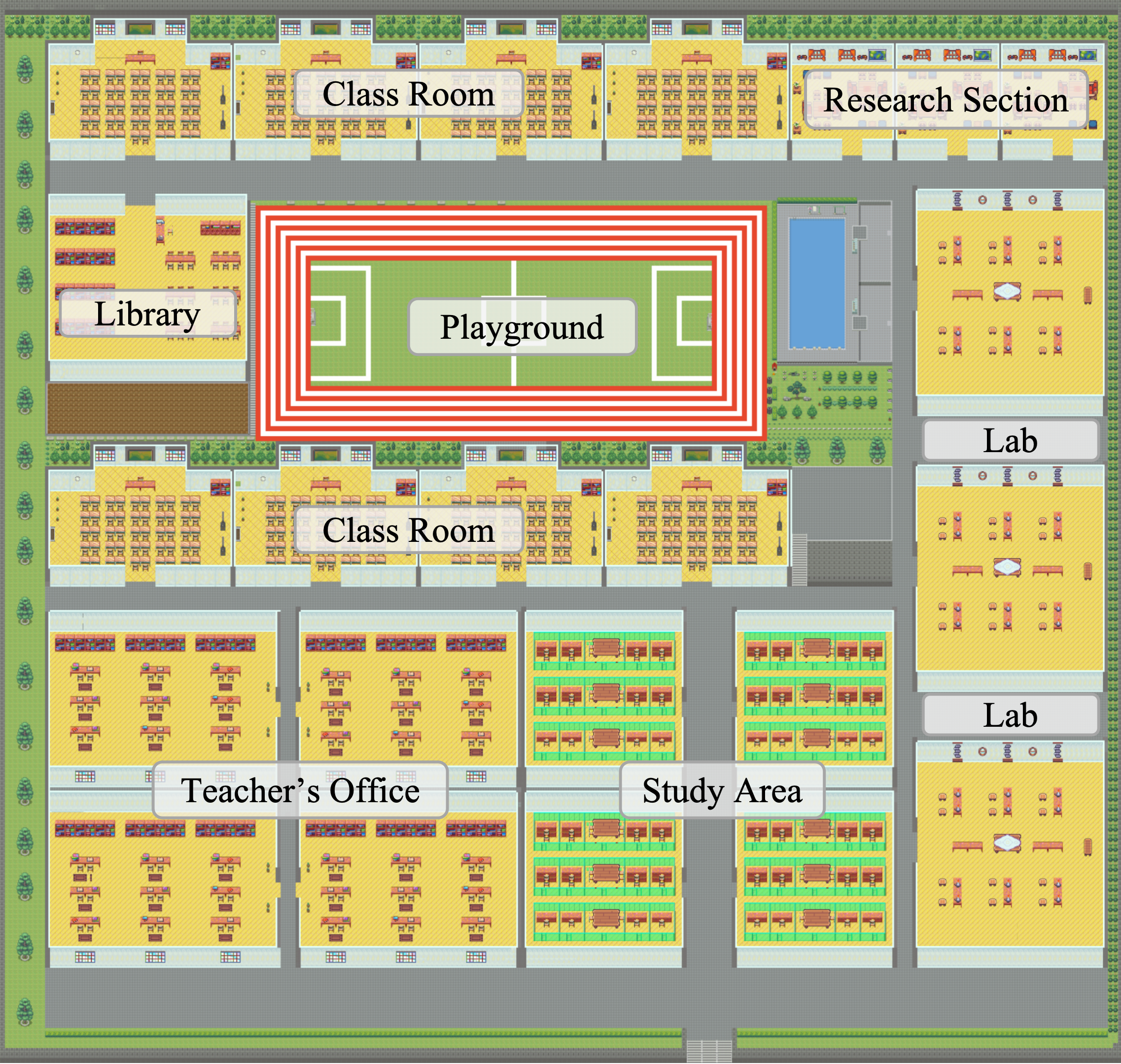
AI-Agent School models educational interactions through an experience-reflection-optimization cycle and a dual memory architecture. Its experience and knowledge bases combine short- and long-term memory. The work examines how agents evolve through simulated school interactions, providing a computational approach to studying educational dynamics.
Study design. Computational educational simulation using LLM agents, a Zero-Exp strategy and dual memory.